
Advocating for the Humanities: A Day in Washington D.C.
March 12, 2026
by Ciera Fisher, MS, Deputy Director
Every year in March, humanities council staff, board members, and supporters descend upon Washington, D.C. for Humanities on the Hill. At Humanities on the Hill, we meet with our Senators, Representatives, and/or their staffers to discuss the importance of our work and advocate for funding for the National Endowment for the Humanities (NEH) in general and specifically the Federal/State Partnership, which is the NEH program Delaware Humanities falls under.
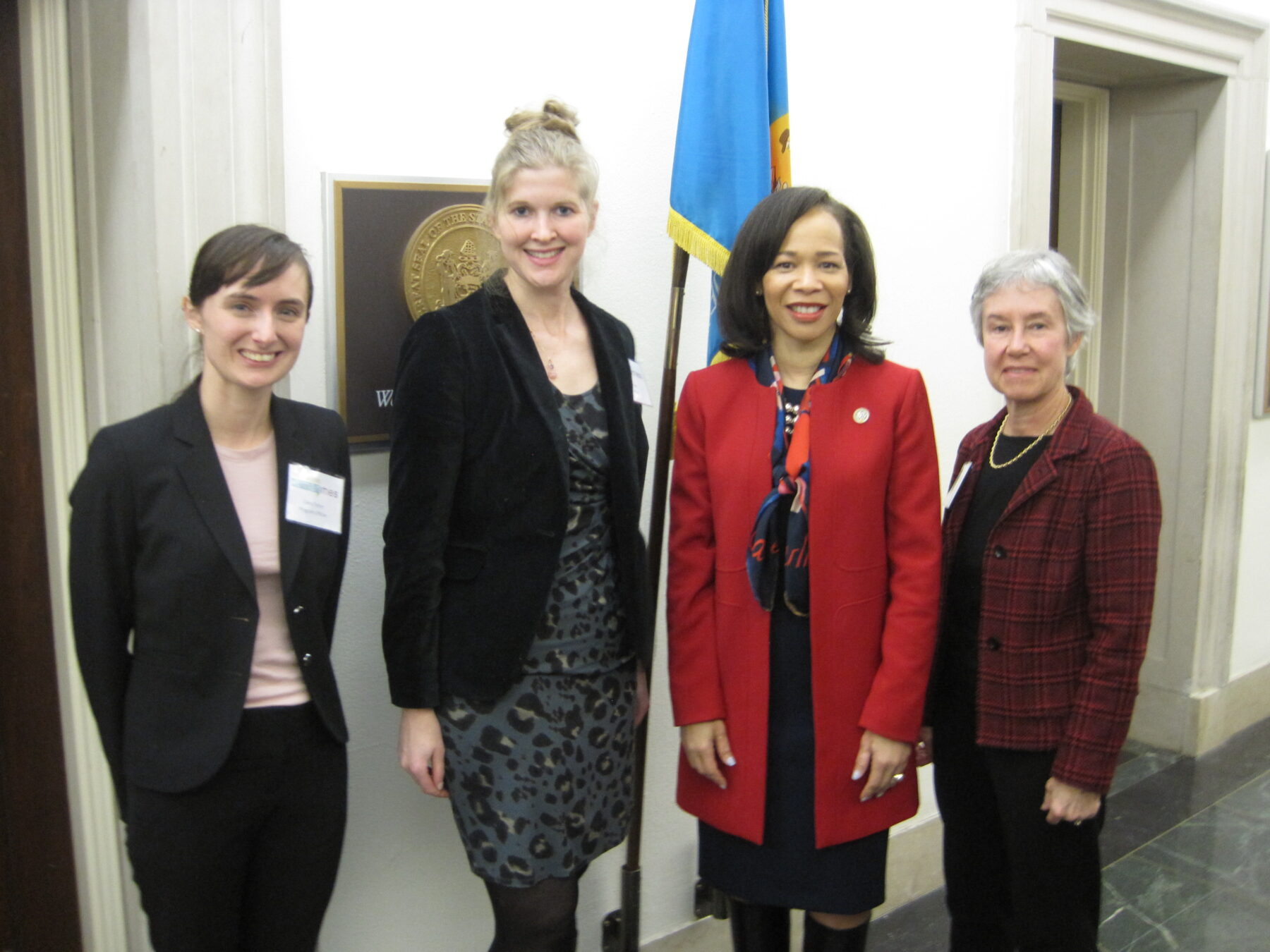
My first Humanities on the Hill experience was in 2018. Boarding the train to D.C., I immediately started to feel excited about the experience, following in the commuting footsteps of President Biden and Senator Carper. I was told we would most likely not get to meet with our actual politicians, only their staffers, but in the last five minutes of our meeting with then Representative Lisa Blunt Rochester’s staff member, who should walk through the door but the Representative herself, saying she had to be sure to take a moment to say “Hello” to Delaware Humanities. At our next two meetings, both Senators Carper and Coons were present for the entire meetings, listening attentively, asking questions, and voicing their support of all we do. I will admit I was a bit star-struck and bewildered, wondering how and why these busy and important people were using some of their precious time to meet with us.
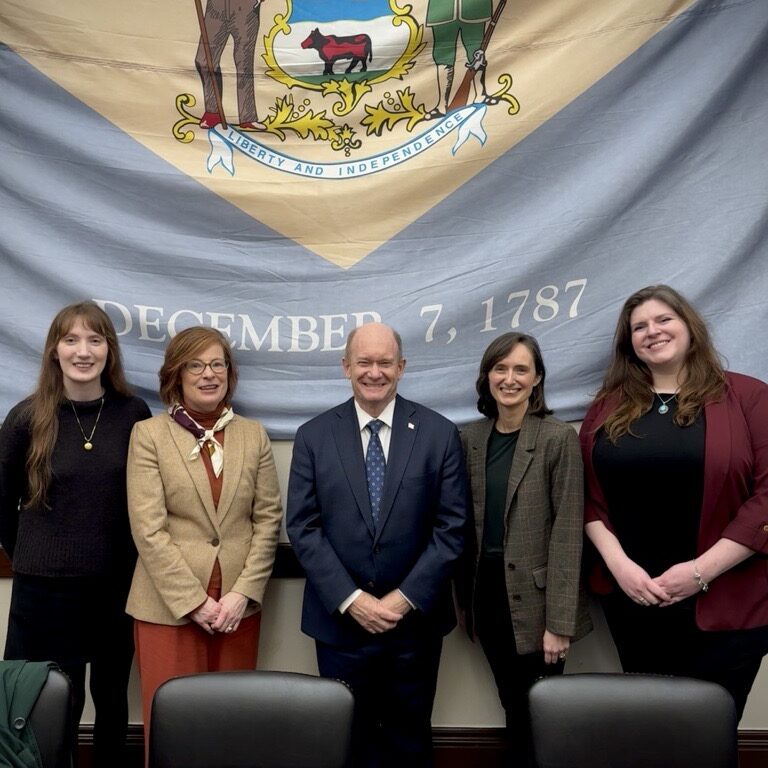
Now eight years after my first Humanities on the Hill experience, and the first year of advocacy after the abrupt termination of our federal funds, while the mechanics of the meetings were the same, the conversations shifted. Instead of us largely talking about the impact of our programs and projects over the last year, we were asked many questions about how our organization and by extension Delawareans had been impacted by this loss of funding. In every meeting, we were asked some version of the question “what do you need us to do?”. I realized in this moment my past self should not have been bewildered by our politicians taking the time to meet and talk with us. This is democracy functioning. Our elected officials work for us—their job is to know, understand, and then represent our needs. However, my feeling of awe was not misplaced. Senators and Representatives are extremely busy individuals (if you think you have a hectic day, sit in a politician’s office for ten minutes – the phones ring nonstop, people move nonstop, and I personally got tired just watching them). The fact that they or their staffers are able to take the time, actively listen, and be present in these meetings with us when they have so many pressing issues is nothing short of amazing.

While in the city, our staff took time to visit the U.S. Botanic Garden and the National Museum of the American Indian. When trying to decide where to go, we looked at the map and then proceeded to outline all the museums and monuments we had never been to before. As a group who lives so close to D.C., it was a bit embarrassing how little we had utilized these free, world-renowned museums essentially in our backyard. In this moment, I had a small epiphany. When we express the importance of our work and our need for federal funding, we encounter from the general public a lot of “what about”-isms. What about cancer research, what about elder care, what about insert-your-cause-here. I can tell you for certain that we all care about those issues too. When we are advocating for the humanities, we are never saying this should be “either/or”, but this should be “also”. I realized this is why our politicians took the time to meet with us. They understand this is “and”, not “or”, and as long as we continue to prove our positive impact, the humanities are worthy of time, energy, and funding.
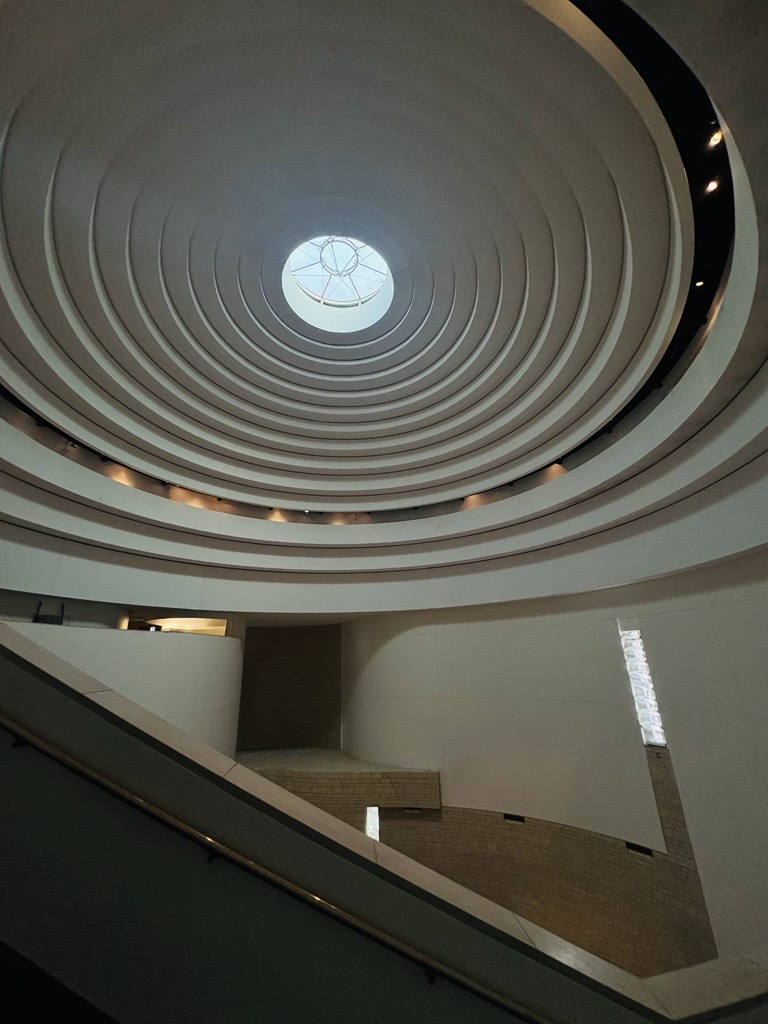
Among all those worthy causes that require tireless advocacy, where do the humanities fit? The humanities are often described as being hard to define. As a field that studies human society and culture, it often takes shape in sharing experiences through writing, conversations, research, or lectures. But that doesn’t mean it isn’t lived and experienced by Americans every day. The quiet moments of reflection among a garden of medicinal plants in the Botanic Garden or examining historic photos of Nanticoke tribal members in an exhibit at the National Museum of the American Indian – these are the humanities in action. I hope that Americans can see value in the many different causes that impact our human experience, while also thinking that their fellow citizens are deserving of both funding for cancer AND funding for museums. And at least from my perspective, if I’m not personally reaping the benefits of these programs, services, and places existing, I’m still certainly glad they are there for those who are or who need them.
On April 2, 2025 Delaware Humanities received notice of the abrupt termination of state humanities councils’ National Endowment for the Humanities’ (NEH) general operating support grants. This funding loss not only directly impacted our organization, but the many programs and grants available to Delawareans. To learn more about our advocacy efforts and why we’re fighting for federal funding, visit our NEH Cuts FAQs page here.