
Celebrating Tribal History: A Recap of Voices of the First Peoples with the Lenape Indian Tribe of Delaware
May 27, 2026
by Rebecca Olsen, PhD, Senior Programs Officer
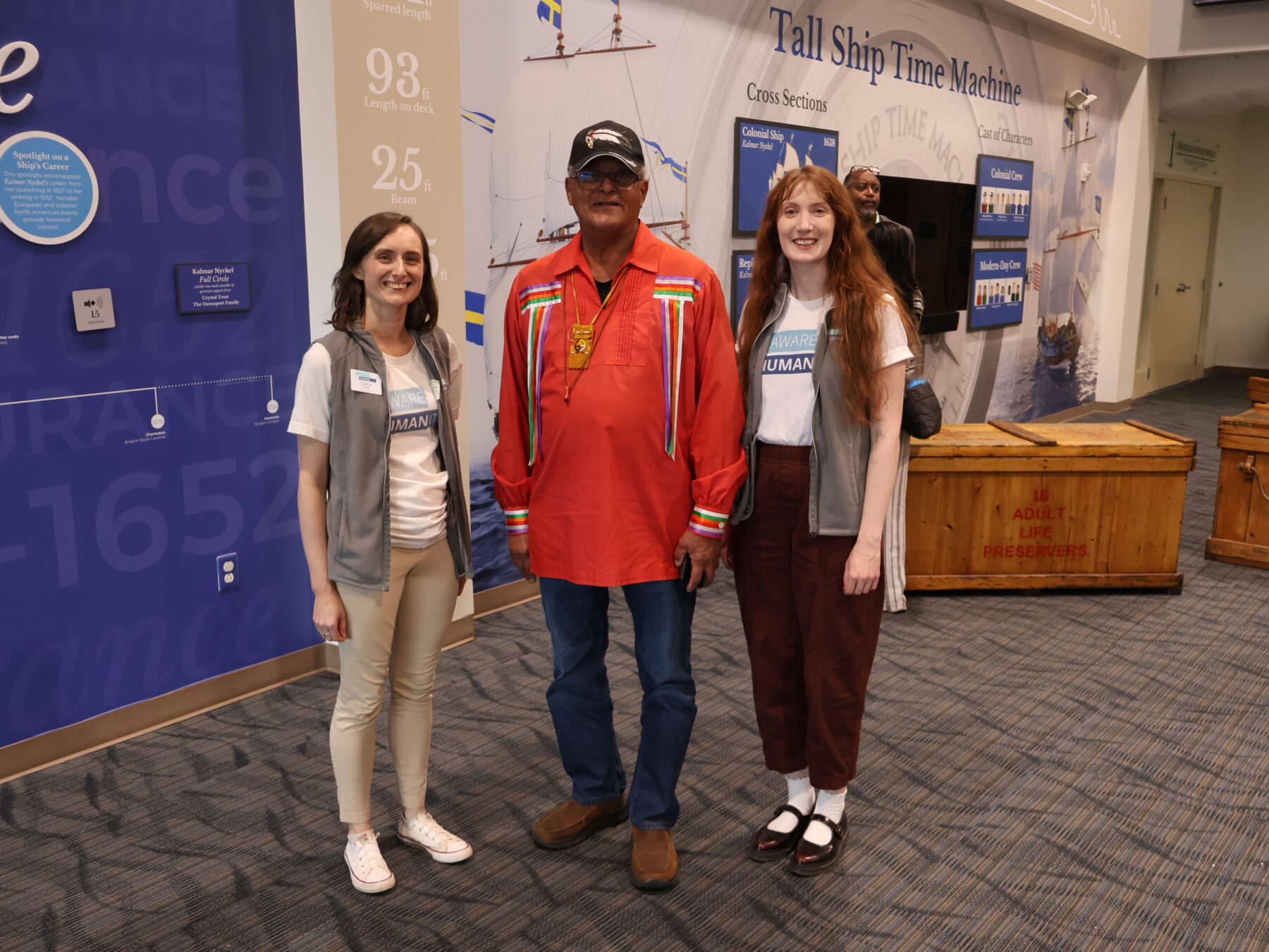
On Saturday, May 9, we welcomed a crowded line of people into the Kalmar Nyckel’s Copeland Maritime Center for our sold-out event Voices of the First Peoples with the Lenape Indian Tribe of Delaware, an afternoon celebrating the Tribe’s history and cultural resilience. We created this program in collaboration with our community partners—the Tribe, the Delaware Teachers Institute, and the Kalmar Nyckel—as part of the national initiative By the People: Conversations Beyond 250. As the First State, Delaware is buzzing with 250th programming and events. By the People presented us with the opportunity to create unique programming focused on Indigenous history.
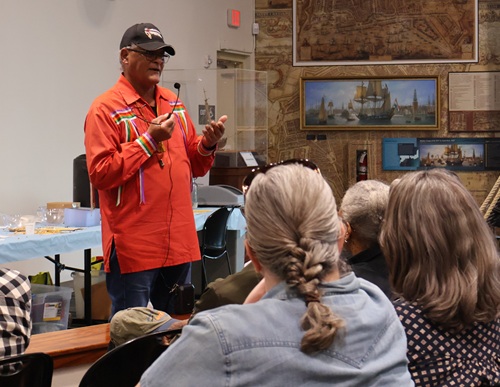
Chief Dennis “White Otter” Coker, Principal Chief of the Lenape Indian Tribe of Delaware—and our guide for the afternoon—welcomed us with a blessing and reflected on Tribal history of both centuries past and recent years. 2026 may be the 250th anniversary of the signing of the Declaration of Independence, but from Chief Coker’s perspective, this is a complex and painful milestone. It is more notable for the Tribe to mark other milestones. One milestone: the arrival of the Swedish in the place we now call Delaware and “the 388th year of friendship with our Swedish friends—so [sic] it’s been a long, enduring friendship.” (This is what made the Kalmar Nyckel the perfect host location!)
Another milestone: This year will mark the 10th anniversary of the Tribe’s state recognition. Chief Coker recounted his efforts leading the Tribe to state recognition; “after a 25-year effort” Delaware Governor Jack Markell signed legislation officially recognizing the long and continued history of the Lenape Community in the state of Delaware on August 4, 2016.
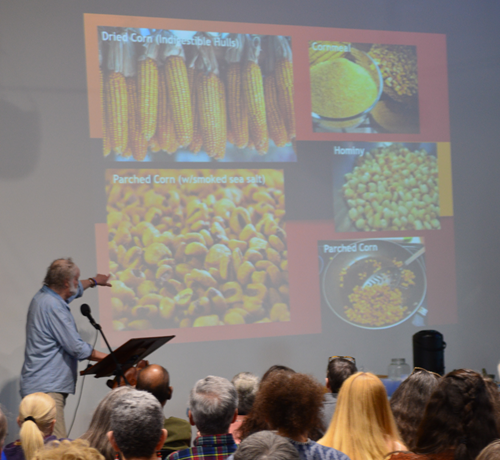
Chief Coker then welcomed Henry Ward to share the stage. Henry’s work and presentations are unique—he is a professional archeologist and chef who specializes in recreating foods from different cultures and time periods. His in-depth research and culinary experimentation allow him to develop authentic recipes and menus that span ages. Henry has long collaborated with the Tribe. That afternoon, he walked us through the fruits, vegetables, grains, and animal sources of food in centuries of the continent’s past and specific to this region, and what archeologists have learned about how Indigenous peoples prepared those foods. Thanks to Henry’s skills as a chef, everyone could sample tea and snacks made with the ingredients and techniques of Indigenous food.
With snacks in hand, attendees settled in for a screening of “First People. First State: Cheswold’s American Indian Community,” a new documentary created with the Lenape Indian Tribe of Delaware through support from Delaware 250, Delaware Heritage Commission, Delaware Public Archives, and 302 Stories. Through interviews, the film “honors and celebrates the voices, lived experiences, [and] profound resilience” of Cheswold’s Community Elders and includes stories of childhood in a segregated Delaware, the closure of their tribal school during school integration, and the many ways they built—and continue to build—community with one another.
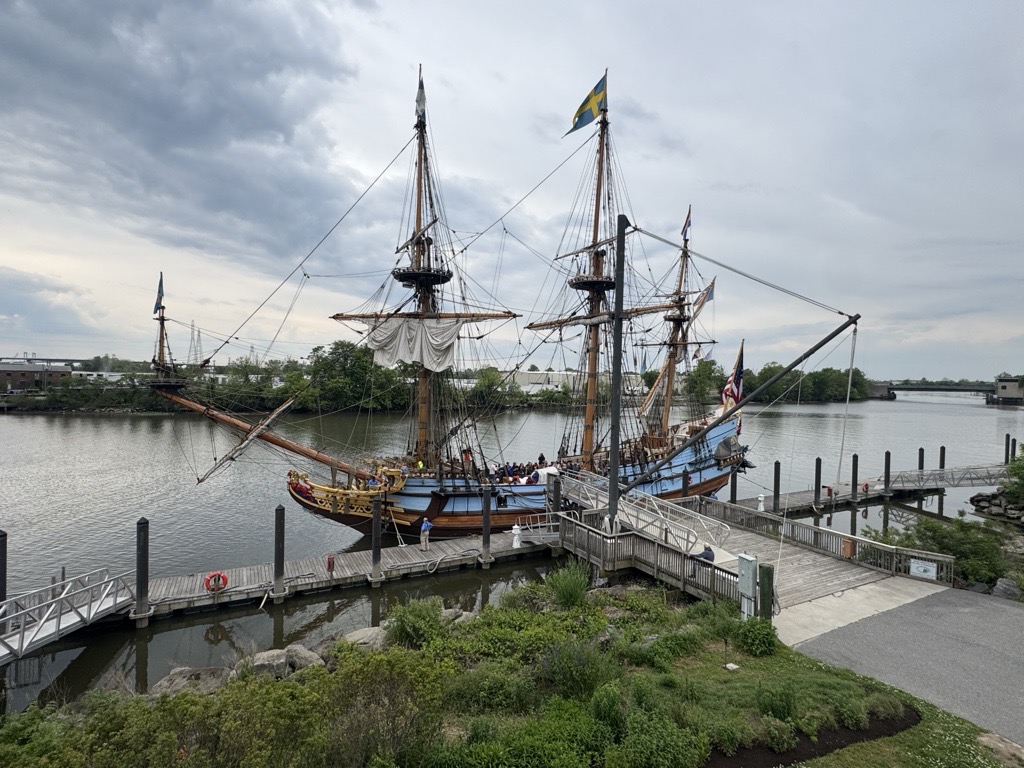
For the K-12 teachers who attended as part of our collaboration with the Delaware Teachers Institute, an educational cruise on the Kalmar Nyckel itself was the last order of the day thanks to efforts of University of Delaware Professor Jon Cox.
In the weeks since our event, we’ve been overwhelmed with the kind feedback we’ve received from attendees; our inbox filled with messages of thanks and appreciation. One person wrote to us: “Thank you for this presentation. I have lived in [Delaware] all my life and my eyes were opened to the experiences of others. Time so very well spent.”
At Delaware Humanities, we aim to be connectors of people and ideas throughout the state. It was an honor to work with Chief Coker and the Lenape Indian Tribe of Delaware, Henry Ward, the Delaware Teachers Institute, and the Kalmar Nyckel to create a one-of-a-kind afternoon. It was likewise an honor to share that afternoon with so many people. To everyone who attended, we’re grateful you could join us and experience something special. To readers here, I’ll leave you with Chief Coker’s words of blessing on that day:
“We turn our thoughts to the Creator, to great mystery or great Spirit, and send greetings and thanks for all of the gifts of creation. Everything we need to get to live a good life is here on our Mother Earth. We have now arrived at a place where we end our words before other words. Of all the things we have named, it is not our intention to leave anything out as something was forgotten. We leave it to each individual to send some greetings and thanks in their own way. And now our minds are one.”
Stay tuned for an announcement about our next Voices of the First Peoples program with the Nanticoke Indian Tribe of Delaware.
By the People: Conversations Beyond 250 is a series of community-driven programs created by humanities councils across the United States, its territories, and the District of Columbia in collaboration with local partners. Together, these programs explore 250 years of the nation’s cultural life and imagine its shared future. The initiative was developed by the Federation of State Humanities Councils and the Smithsonian Center for Folklife and Cultural Heritage as a complement to the 2026 Smithsonian Folklife Festival.